
Thus Have We Heard
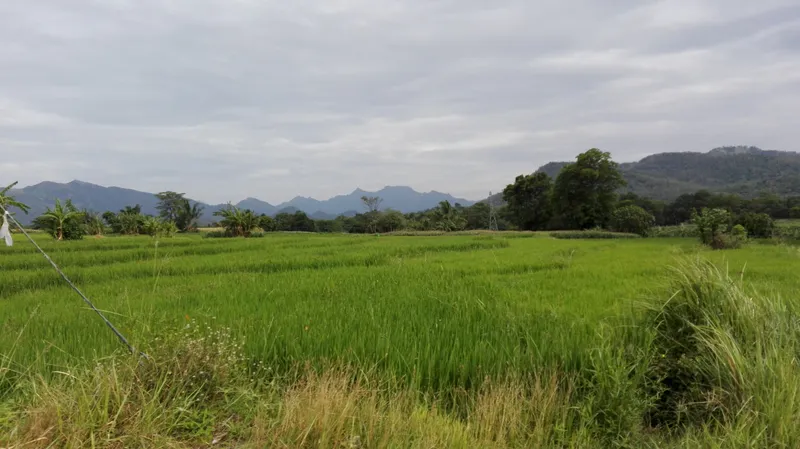
Farming was the core economic activity of the ancien régime of Puranagamas. Hunting and gathering were subsidiary activities. In all these pursuits, the customary traditions, ritual practices, and folklore ensured that the complex ecological system was kept in balance. Man was considered part of the environment.
The sun gave life to both humans and animals. Water, seeds, and other essentials came from the sun. The moon produces the ocean tide, bringing a tremendous influence on man and his environment. Our ancestors knew that while the sun and the moon journeyed through the sky, all their rivers would flow, irrigating their land and ensuring its bounty to them. They cultivated their fields and even planned their food and clothes based on nature’s pattern. They observed that the moon increased and decreased in size in a cyclical pattern and based the thirteen months of their calendar on it. Farming and production were timed to and set apart to those months environmentally suited to such activities. It was a recognition of the symbiotic relationship of all of creation.
Lanka’s kings were warriors, her deity the warrior Lord Skanda. But the cycle of birth and death held no fear to the Lankans; they recognized the unseen hand of God in the cycle of reincarnation and the interplay of the light of the firmament. But fundamental to this lifestyle was the notion that each thing has its place and reason in the universe, so when the European colonists began to visit, the Lankans allowed them to stay.
Whatever the reason, the fact is that with the arrival of the European colonialists, Lanka’s traditional lifestyles suffered. Her rural population and the descendants of the Yaksha Gotra have become increasingly marginalised. The Wanniya’I Attho have been removed from their traditional habitats in pursuit of the great god of development. All these were perpetrated by their co-citizens, with the best of intentions and in accordance with their training.
The problem arose with the empirical knowledge system that originated in the West. The dominant cultures of the past five hundred years or so overran the local and culturally specific knowledge of the ancient peoples they conquered. This knowledge is the backbone of the modern industrial nations.
The experience of the industrial and newly industrial countries (NIC) is often cited as an example of the contribution of science and technology to increased productivity as a prerequisite for social, economic, and technological development and improved living conditions.
Unfortunately, less developed nations have their share of experts with this perspective; after all, most of them were trained in the West and, if not, at the very least in parallel systems in their own countries. Their value systems are warped, and they even follow the Northern patterns of prestige. However, one should not throw out the baby with the bathwater; the advantages of technology are not to be decried. It stands to reason then that what is needed is a union of our traditional knowledge with the best of science and technology.